Unsafe Drinking Water
We know how to filter water, why doesn’t everyone have safe water? What is the bottleneck?
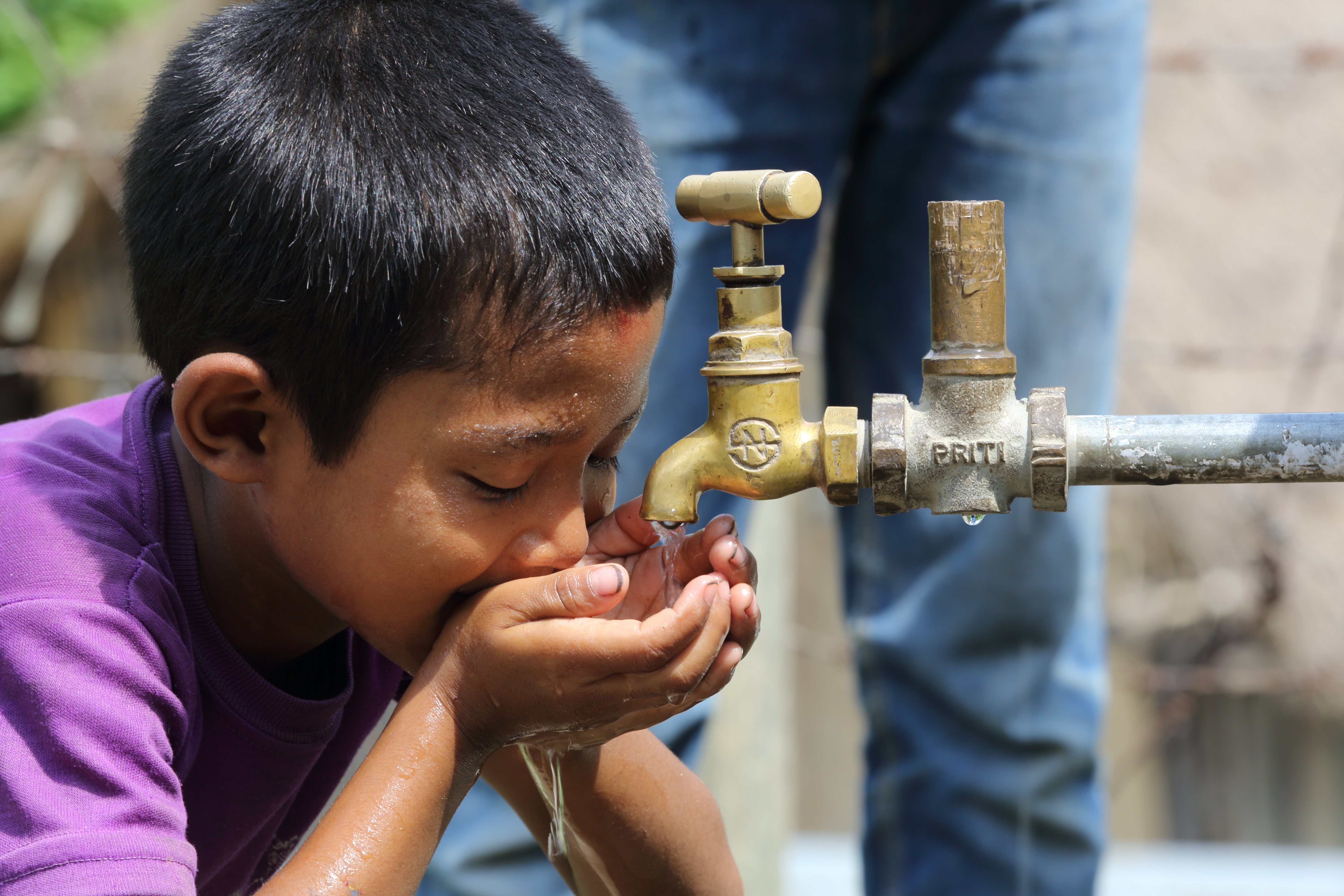
Today, 2.1 billion people – roughly 1 in 4 – lack access to safe drinking water (WHO, UNICEF, 2025) and because the average walk to fetch safe water is over 30 minutes, people often use unsafe water. About 70% of the 4.5 billion diarrheal episodes that occur each year are from unsafe water (linked to cholera, typhoid fever, dysentery, Giardiasis, Amoebiasis, Cryptosporidiosis, Hepatitis A, Norovirus, Campylobacteriosis, etc.) and about 1 million of those result in death (WHO) making it the third leading cause of death in children under 5 (Haushofer).
There are a number of promising approaches being explored to help:
1. Better water infrastructure - wells, pipes, pumps, treatment plants, and storage tanks - to deliver clean water to people’s homes. About 25% of hand-pumped wells in Africa are non-functional at any given time because they need repair. Some innovations that are being developed here are:
(A) Cheap electronic sensors to detect broken water pumps. Researchers at Oxford developed inexpensive sensors to village handpumps that send a cellular signal when the pump isn’t working. They paired this with a local maintenance service called FundiFix on standby. The result was dramatic – historically, if a remote well’s pump broke, it might be down for a month or more; with smart monitoring, repair teams were dispatched quickly, cutting downtime to under 3 days on average (UKRI, 2023).
(B) Cheap electronic sensors to detect bacterial contamination in water supplies. Startups such as bNovate in Switzerland are developing rapid water testing devices that can detect bacterial contamination in minutes rather than days (World Economic Forum, 2023). Embedding such sensors in distribution systems could alert operators to contamination early, preventing outbreaks (much like a smoke alarm for water supplies).
(C) Solar-powered pumps are transforming water access in off-grid communities. In rural villages across Africa and Asia, solar panels now power pumps that draw clean groundwater from deep underground, filling storage tanks that feed community taps – no fuel costs, no diesel fumes, just sunlight. These systems are remarkably reliable and economical: while installation costs $5,000-$15,000 per village, operating costs are nearly zero, making them far cheaper than diesel pumps over their 20+ year lifespan. UNICEF has installed nearly 9,000 solar water systems across 56 countries since 2019, and newer systems include filtration and chlorination to deliver truly safe water. For the 800 million people in sun-rich areas without electricity grids, solar pumps could bring reliable, safe water to hundreds of millions, freeing time for education and work while dramatically cutting waterborne disease.
(D) Cheap household water purification systems that don’t require electricity. There are companies that are working on this; for example, Wateroam’s portable filter needs no electricity and costs only about $2 per person per year for rural communities (World Economic Forum, 2023). If we can scale up home purification systems, we can build resiliency into communities until community infrastructure is more developed.
(E) Cheaper, more effective toilets and sanitation (sewer) systems. 3.4 billion people lack safely managed sanitation (toilets that hygienically separate waste from contact and treat it), and about 354 million still practice open defecation – going in fields or rivers (WHO/UNICEF, 2025). The Gates Foundation has been investigating waterless, self-contained toilets that use chemical or electric processes to kill pathogens on-site and turn waste into ash or compost. If such toilets become cheap enough, they could leapfrog the need for expensive sewer networks in developing cities, meaning far less human waste polluting waterways. London in the 19th century had recurrent cholera until it built a proper sewer system – once human waste was kept out of the Thames drinking water intake, cholera vanished from the city.
Improving worldwide access to clean water will require innovations in chemistry, engineering, biology, economics, management, marketing. If we could just build cheaper and more effective sensors, better neighborhood-based and home-based filters, and better toilets and sewer systems, we could save millions of lives worldwide.
Sources & Further Reading
World Health Organization. “Drinking-water: Key Facts.” WHO, 2023. (link). – A WHO fact sheet providing up-to-date statistics on global drinking water access, health impacts of unsafe water, and challenges like climate change.
UNICEF & WHO Joint Monitoring Programme. Progress on Household Drinking Water, Sanitation and Hygiene 2000–2024: Special Focus on Inequalities, WHO/UNICEF, 2025. (link). – Comprehensive report tracking global progress on water and sanitation, with data on how many people lack services and where inequalities persist.
Kirby, M. A., Nagel, C. L., et al. “Effects of adding household water filters to Rwanda’s health promotion program: a cluster-randomized trial.” npj Clean Water 5, 29 (2022). (link). – A detailed study on a large-scale distribution of LifeStraw family filters in Rwanda, showing reductions in water contamination and child diarrhea, but also discussing challenges in sustained use.
Thomson, P., et al. “Using smart pumps to improve water access in rural Africa.” Oxford Univ., 2023. – (Summarized by UKRI) Describes the Smart Handpumps project in Kenya where sensors and a maintenance service dramatically reduced broken-pump downtime, illustrating how tech and new models can improve infrastructure reliability.
World Economic Forum. “World Water Day 2023: Innovations for improving water access.” WEF Article, March 2023. (link). – Highlights five innovation areas in water, including examples like portable filters (Wateroam), decentralized wastewater treatment (Indra Water), and real-time water quality monitoring, with stats on current water challenges.
UNICEF USA. “1 in 4 Worldwide Still Lack Access to Safe Drinking Water.” UNICEF USA News, Aug 26, 2025. (link). – A news article summarizing the latest UNICEF/WHO findings, including key stats on water and sanitation coverage, and examples of solutions like solar-powered water systems and groundwater mapping.
UN Water. The United Nations World Water Development Report 2021: Valuing Water, UNESCO, 2021. (link). – Provides context on global wastewater treatment (80% untreated) and the importance of investing in sanitation and source protection, with case studies of sustainable water management.
Spears, Dean. How Much International Variation in Child Height Can Sanitation Explain?, World Bank, 2013. (link). – (Accessible summary of later published work) Explores the link between open defecation and child stunting and health, underpinning why eliminating open defecation (through sanitation) can improve community health outcomes.
Nature Editorial. “Water crisis: how local technologies can help solve a global problem.” Nature 620, 7 (August 2023). – A brief editorial from Nature highlighting the urgency of the water crisis and the need to scale both new and traditional solutions, reflecting the high-level global perspective post-UN Water Conference 2023.
Arnold, B. F., & Colford, J. M. “Treating water with chlorine at point-of-use to improve water quality and reduce child diarrhea in developing countries: a systematic review and meta-analysis.” American Journal of Tropical Medicine and Hygiene 76.2 (2007): 354-364. – An older but influential meta-analysis quantifying the average reduction in child diarrhea from chlorination programs, providing evidence for the effectiveness of household water treatment.